If you've watched a Twitch stream or a YouTube let's-play and wondered how console gameplay ends up on a computer with overlays, alerts, and a webcam, the missing piece is a capture card. A capture card is a hardware device that takes the video and audio from a source — a game console, a camera, or a second PC — and feeds it into a computer where you can record it, stream it, or both. The short version: you need one to capture a console or run a two-PC streaming setup, but you don't need one to record a single PC.
How Does a Capture Card Work?
A typical external capture card has three connections, and understanding them is most of what you need to know.
An HDMI cable carries the signal into the card from your source — your console, camera, or gaming PC. A second HDMI cable runs out of the card to your TV or monitor. That second connection is called passthrough: it sends a copy of the signal straight to your display so you keep playing on your own screen with no meaningful added delay. A USB cable then connects the card to your capture PC, where recording or streaming software picks it up as a standard video source.
From the source's point of view, nothing has changed. Your console thinks it's just sending HDMI to a screen. The card sits quietly in the middle, copying that signal over USB to the capture PC in the background. Because your gameplay reaches your monitor through passthrough — not through the capture path — the latency of the capture process doesn't affect what you see while you play. It only affects the preview and recording on the capture PC.
Internal cards work the same way conceptually, except the signal travels over the computer's PCIe bus instead of a USB cable, since the card lives inside the case.
Does a Capture Card Encode Your Video?
This is the most common misunderstanding about how a video capture card works. Many people assume the card compresses the video before sending it to the PC. Most external cards don't.
The majority of external capture cards are simple by design: they digitize the incoming HDMI signal and pass it to the computer in a raw or lightly-formatted color stream (you'll see this listed as NV12 or YUY2 in specs). The actual encoding — turning that stream into an H.264 or H.265 file or live broadcast — is handled by your computer's CPU or GPU. That means a weak PC can still be a bottleneck even with a good card installed. The card moved the signal; your computer still has to do the heavy lifting.
There's an exception worth knowing. Some cards include an onboard hardware encoder and output an already-compressed stream. These offload encoding work from the computer, which is genuinely useful on an older or low-powered laptop that would otherwise choke. The trade-off is that hardware-compressed footage can show slight artifacting in fast, busy scenes compared to an uncompressed raw card. So the practical rule is: pair a raw capture card with a modern PC for the cleanest image, or choose a card with a hardware encoder if your computer is underpowered.
Internal vs External Capture Cards: Which Type Fits You?
There are two physical formats, and the right one depends entirely on your machine.
Internal (PCIe) capture cards install into a PCIe expansion slot inside a desktop. The signal travels over the internal bus, which tends to give the lowest latency, and the card doesn't occupy a USB port. The catch is obvious: you need a desktop with a free slot, and the setup isn't portable.
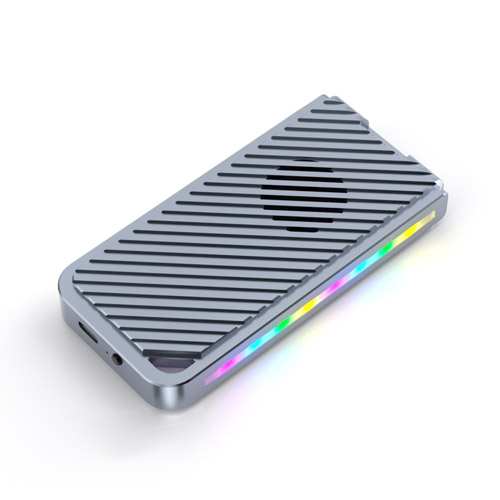
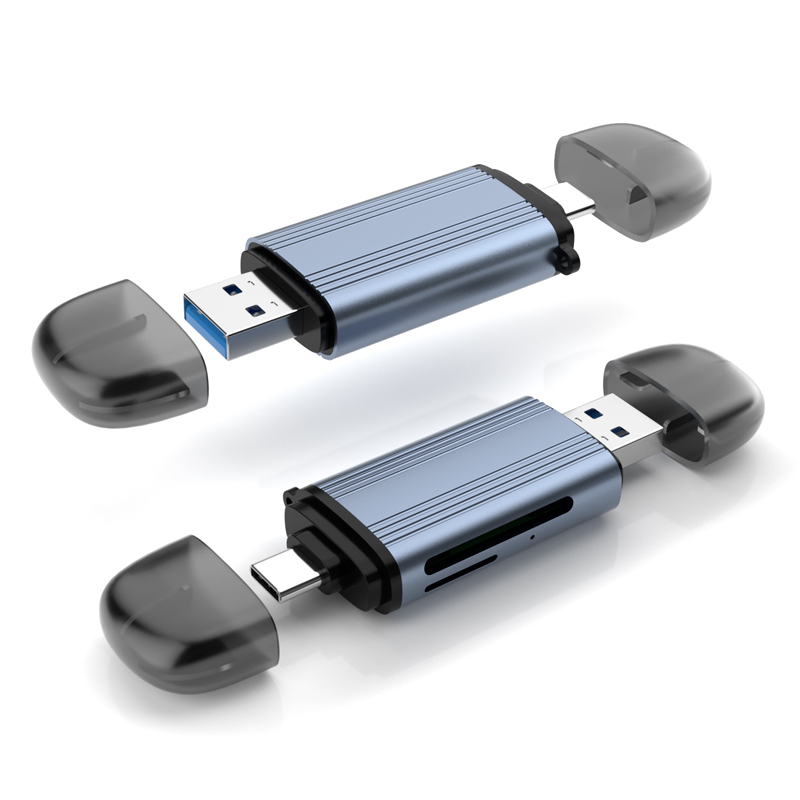
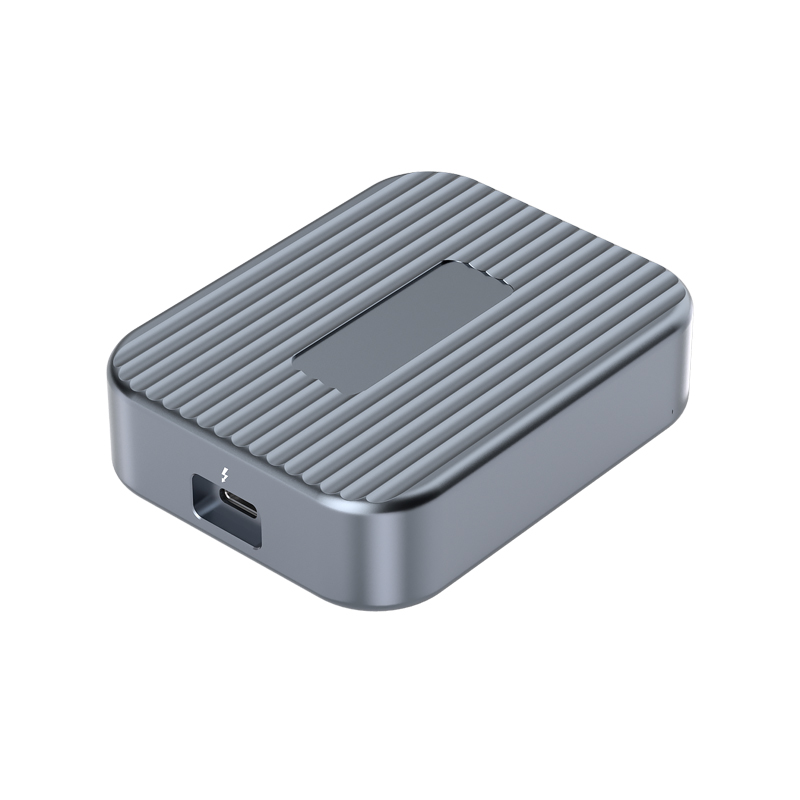
External (USB) capture cards plug into a USB port and work with laptops and desktops alike. They're portable, easy to move between machines, and most are UVC (USB Video Class) compliant — meaning they're recognized by Windows, macOS, and Linux as a standard video device without installing drivers. That's why software like OBS Studio sees an external card the moment you plug it in.
If you have a permanent desktop setup and want the lowest latency, an internal card is a reasonable choice. If you use a laptop, want portability, or plan to move the card between machines, go external.
Do You Actually Need a Capture Card?
Here's the decision most people are really asking about. Work through your situation:
Recording or streaming your own single PC? You don't need a capture card. Screen-capture software like OBS Studio reads your display directly, and your CPU or GPU handles the encoding. Adding a card to this setup doesn't improve quality or take work off your machine — it just adds cost.
Recording or streaming a game console (PlayStation, Xbox, Nintendo Switch)? You need one. A console outputs HDMI to a display, and a capture card is the clean way to bring that HDMI signal into a PC. The consoles' built-in capture tools exist, but they hit walls fast: PlayStation can broadcast, but only inside Sony's interface with no custom overlays or branded graphics, and Switch clip recording is tightly time-limited. Most people who get serious outgrow those tools quickly.
Running a two-PC setup — a gaming PC plus a dedicated streaming PC? You need one. Encoding a stream while playing a demanding game pulls hard on a single machine, and you'll feel it as frame drops or stutter. A capture card sends the raw signal from the gaming PC to a second PC that does all the encoding, so the game runs unbothered.
Bringing a camera or other external source into a computer? You need one — more on those uses below.
Why Is My Capture Card Showing a Black Screen?
If you connect everything correctly and still get a black screen or "no signal," the cause is usually HDCP (High-bandwidth Digital Content Protection). HDCP is a copy-protection layer that blocks capture of protected output, and PlayStation systems enable it by default at the system level.
For your own gameplay, the fix is to turn HDCP off before you capture. On PlayStation, that setting lives under Settings → System → HDMI, where you disable Enable HDCP; other consoles keep it in a similar system or HDMI menu.
There's an important boundary here. Disabling HDCP applies only to content you have the right to capture, such as your own gameplay. A capture card is not a tool for getting around copy protection on commercial content — streaming apps like Netflix and Disney+, and Blu-ray playback, keep HDCP active on purpose, and those sources will show a black frame by design. That's expected behavior, not a defect.
A black screen can also come from a few simpler causes: the source is outputting a resolution or frame rate higher than the card supports, the HDMI cable isn't rated for the bandwidth you're pushing, or a connector is loose. If HDCP isn't the issue, lower the source resolution and reseat the cables.
What Specs Should You Check Before Buying?
A "4K" sticker on the box doesn't tell you what you need to know. Check these before buying any HDMI capture card.
Capture resolution vs. passthrough resolution — they're two different numbers. Capture is what your computer records; passthrough is what your monitor receives while you play. A card might pass 4K60 through to your display while only capturing 1080p60 — which is fine if you want to game in 4K but only need 1080p recordings. For competitive players, a passthrough that supports 1080p240 or 1440p144 is often more valuable than 4K30. Read both numbers, and match each to the display and recording quality you actually want.
Interface bandwidth. This is the spec that quietly caps your quality. USB 2.0 maxes out around 480 Mbps, which forces heavy compression and adds noticeable latency — uncompressed, that realistically lands around 720p30, so cards on USB 2.0 lean on an onboard hardware encoder to reach 1080p. USB 3.0 (5 Gbps) is the practical floor for clean, uncompressed 1080p60. Capturing 4K60 generally needs a USB 3.1 Gen 2 (10 Gbps) interface, an internal PCIe card, or a higher-bandwidth connection. One catch: many laptop USB-C ports are wired internally as USB 2.0, so verify the port's actual data speed in your laptop's spec sheet — the connector shape alone doesn't tell you.
HDR support. Capturing HDR needs both card support and enough bandwidth. On a constrained link, a card may quietly drop to lower chroma subsampling (4:2:0), which is why some "HDR" recordings come out looking washed out. If HDR matters to you, confirm the card lists it at your target resolution.
Driver model. UVC class-compliant external cards work without installing drivers. Some cards add a vendor app for extra features like overlays or diagnostics, which is a convenience rather than a requirement.
The quickest way to check fit: set your source to the output you actually want (for example, your console's video output setting), then confirm the card's spec sheet lists that exact resolution and frame rate for capture — not just for passthrough.
Beyond Gaming: Other Things People Use Capture Cards For
Gaming is the most visible use, but a video capture card is just a bridge for any HDMI or SDI source — and that opens up plenty of non-gaming work.
A capture card can turn a DSLR, mirrorless camera, or camcorder into a high-quality video source for calls and streams, giving you a far sharper image than a built-in webcam. Live event teams use them to feed a camera or video switcher into a laptop running streaming software. In conference rooms and AV installations, a card brings a room camera or document camera into a conferencing PC. Education and training setups record lectures, demos, or specialized scopes. And in system integration more broadly, a capture card is how a computer ingests an external HDMI or SDI feed as a standard video input.
If any of these describe you, the same buying logic applies — match the card's capture spec to your source, and make sure your computer's port has the bandwidth to carry it.
Is It Legal to Use a Capture Card?
Capturing content you own or have permission to record is fine — your own gameplay, your own camera feed, an event you're authorized to film. As covered above, turning off HDCP on your own console applies to your gameplay; it isn't a route around the copy protection on commercial streaming or disc content.
One more thing if you're buying hardware rather than just using it: capture cards sold into the US, EU, and UK fall under regional compliance regimes — FCC SDoC in the US, plus CE/UKCA marking and RoHS in the EU and UK. Buy from a source that can show the relevant compliance for your market.
Next Steps
If you've decided a capture card fits your setup, work through this before buying, in order:
• Confirm what your source actually outputs — its resolution and frame rate.
• Pick a card whose capture spec meets that, and whose passthrough matches your display's refresh rate.
• Confirm your computer has a real USB 3.0 (or faster) port, or a free PCIe slot for an internal card.
• Choose your recording and streaming software — OBS Studio is the common free option.
• If you're on PlayStation, plan to disable HDCP first so you don't hit a black screen on day one.
And if you're recording a single PC, skip the card entirely and start with OBS screen capture.
A capture card is the bridge that gets an outside video signal into your computer cleanly. Most people need one for consoles, two-PC streaming, or bringing a camera in — not for recording a single PC. When you do buy, the two specs that decide whether you're happy are the capture resolution and frame rate you actually need, and an interface with the bandwidth to carry it.